Securing a residential or commercial perimeter requires specialized chemistry and structural barrier exclusion engineered for extreme Sonoran Desert conditions. A professional pest control service Phoenix property owners rely on must withstand surface temperatures exceeding 140 degrees Fahrenheit, which rapidly degrades standard retail pyrethroids.
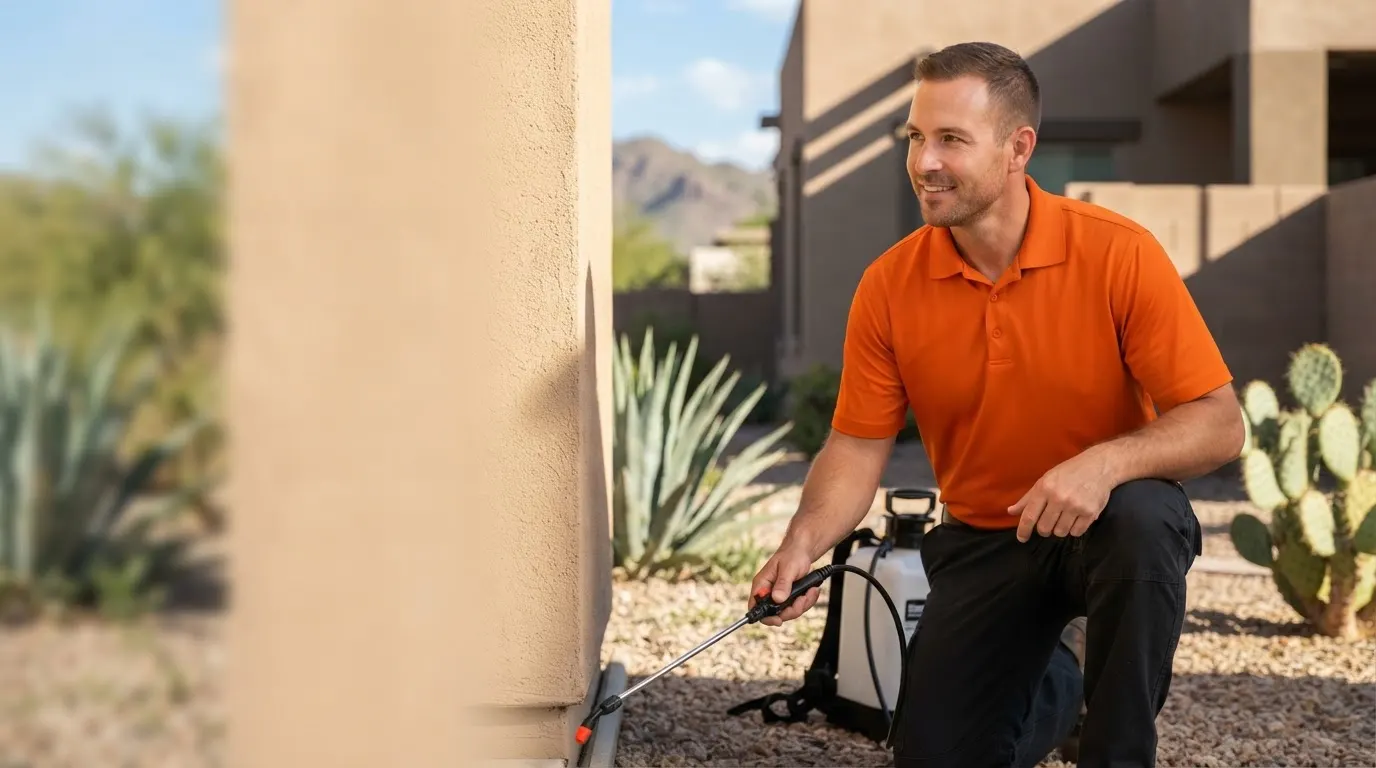
Pest Control Service in Phoenix is an integrated pest management and structural exclusion discipline engineered to neutralize Sonoran desert pests and stop subterranean termites across Maricopa County properties.
Every service reflects the same meticulous attention to detail, whether it's a single job or a larger pest control service project across Phoenix.
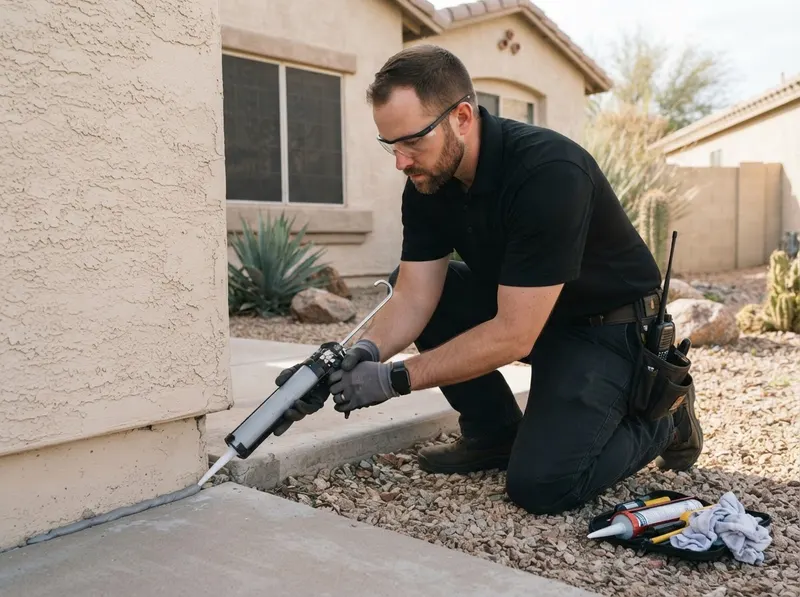
Arizona bark scorpions enter homes through exterior gaps as narrow as 1/16th of an inch. Scorpion structural exclusion seals foundation weep screeds, exterior door thresholds, stucco expansion joints, and pipe penetrations using copper mesh, silicone sealants, and elastomeric compounds. Daytime physical barrier installation pairs with ultraviolet night inspections to identify, extract, and neutralize active scorpions harbored in decorative landscaping, block wall crevices, and foundational perimeters. This systematic physical sealing process ensures that scorpions foraging on exterior stem walls cannot enter living spaces, nurseries, or bedrooms.
Get a quote →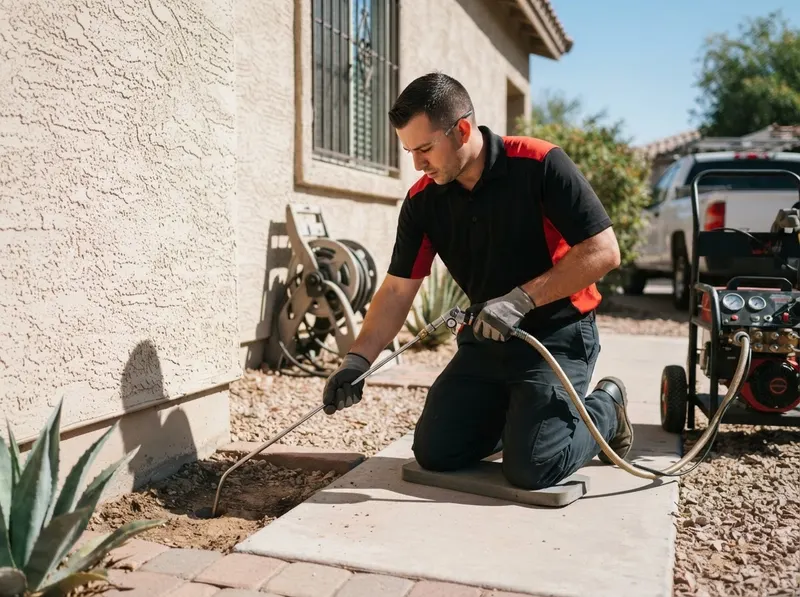
Heterotermes aureus and native subterranean termites cause severe structural timber damage across the Phoenix basin. Soil treatments apply non-repellent termiticides along the structural foundation through trenching and precision slab injection. Foraging worker termites traverse the invisible chemical barrier, transfer the active toxicant through the colony via social grooming, and collapse the underground queen chamber within 60 to 90 days. Continuous soil treatment barriers prevent subterranean workers from building mud shelter tubes up exterior stem walls, plumbing penetrations, and expansion joints.
Get a quote →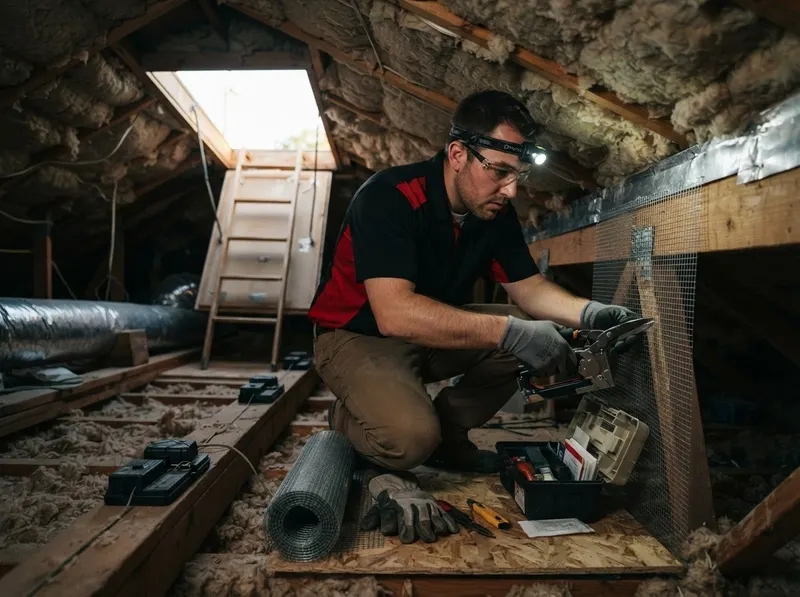
Desert roof rats exploit citrus trees, oleander hedges, and palm trees to access rooflines and breach attic vents. Rat management executes complete exterior exclusion using 1/4-inch galvanized steel hardware cloth across gable vents, roof jacks, and tile junctions. Technicians then place mechanical snap traps inside attic raceways to eliminate all trapped rodents without deploying bio-accumulative poison baits. After physical exclusion, thermal fogging or enzymatic sanitization is applied to attic insulation to neutralize pheromone scent markers that attract future rodent colonies.
Get a quote →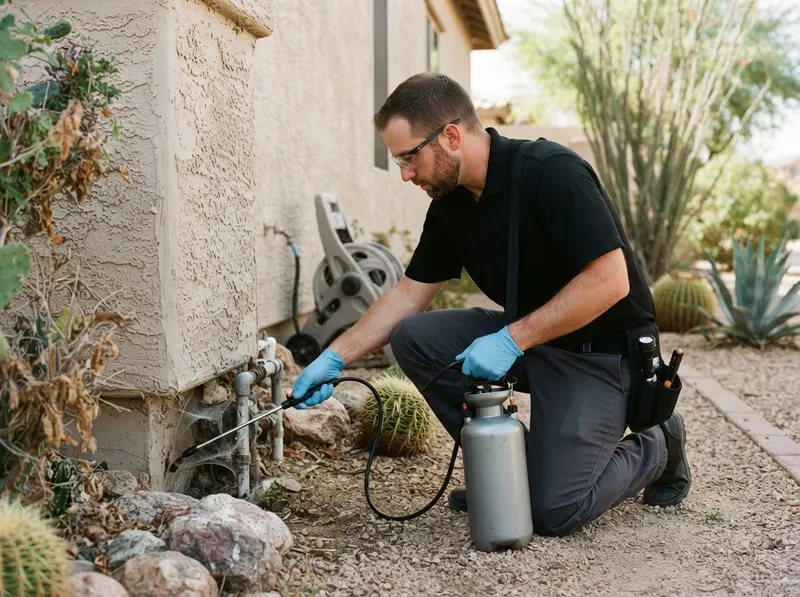
Western black widow spiders and desert recluse varieties inhabit dark storage zones, block wall cavities, meter boxes, and garage perimeters. Spider mitigation removes existing webs, applies targeted micro-crystalline residual formulations into structural micro-fissures, and establishes repellent perimeter barriers along exterior thresholds to prevent secondary web re-establishment. Specialized treatments focus on moisture-prone zones around drip irrigation manifolds and air conditioning condensate drainage lines where desert spiders establish primary web snares.
Get a quote →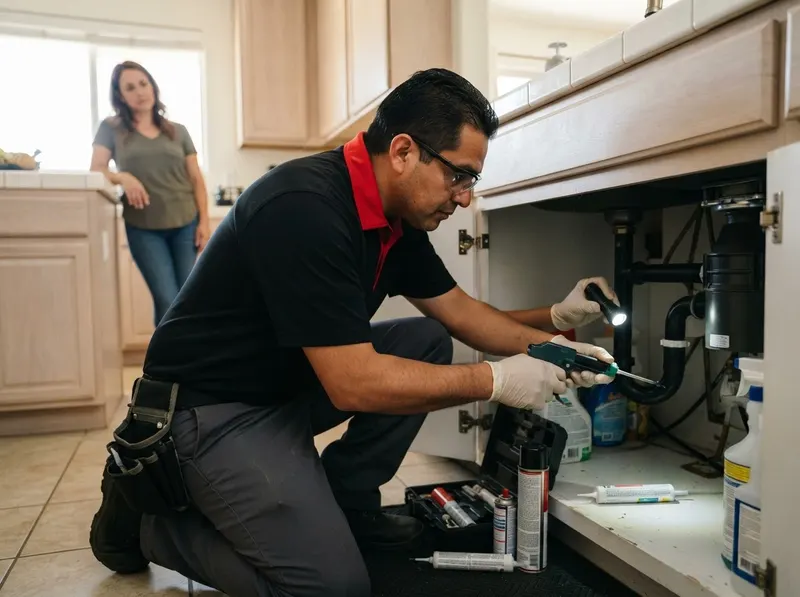
American cockroaches, Turkestan cockroaches, and German cockroaches invade municipal sewer ties, plumbing chases, and kitchen voids. Clean-out services deploy insect growth regulators, micro-encapsulated adulticides, and specialized sewer vent perimeter treatments to stop reproductive cycles and eradicate breeding populations harbored inside subterranean utility conduits. Technicians treat exterior cleanout caps, meter vaults, and decorative river rock beds to suppress exterior cockroach colonies before nymphs mature and migrate into home plumbing infrastructure.
Get a quote →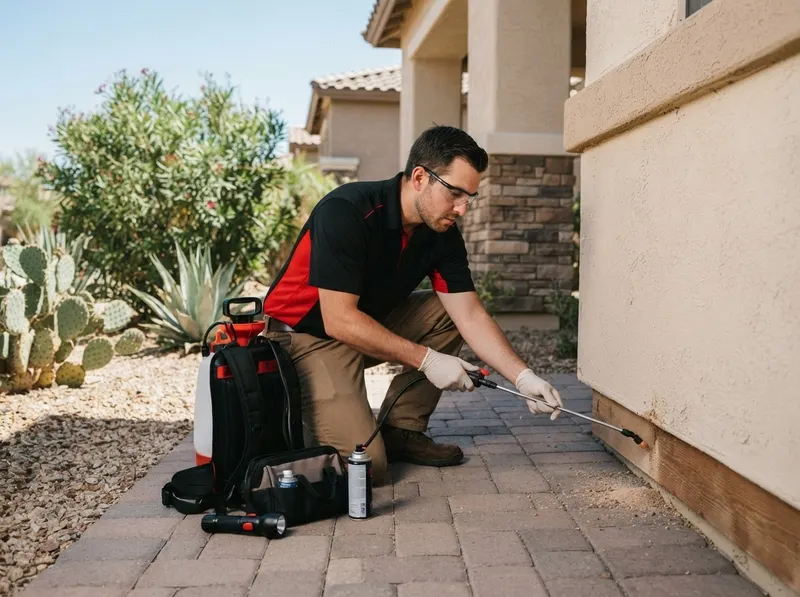
Camponotus species nest inside exterior structural wood exposed to moisture, irrigation overspray, or roof leaks. Carpenter ant remediation locates satellite nesting chambers, injects specialized non-repellent transfer compounds into wall voids, and applies perimeter granular baits along structural foraging trails to destroy the main reproductive colony. Structural moisture correction recommendations are paired with targeted systemic wood applications to ensure satellite colonies cannot re-infest soft framing timbers or fascia boards.
Get a quote →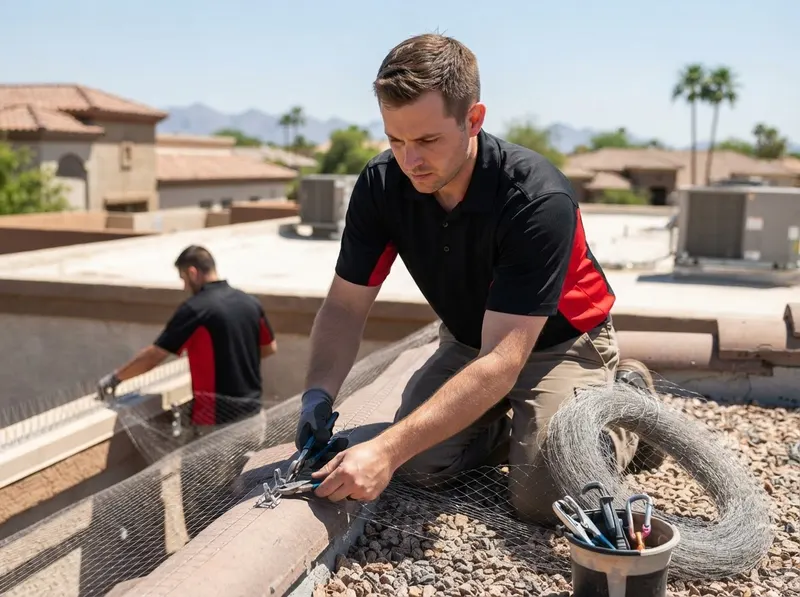
Feral pigeons nest beneath residential solar panel arrays, commercial roof parapets, and HVAC recesses, producing caustic uric acid accumulations and parasite infestations. Solar panel perimeter screening with heavy-gauge coated wire mesh, mechanical bird spikes, and tensioned wire barriers permanently blocks roosting zones without harming protected desert bird species. Remediation includes the removal of accumulated biohazard nesting debris and pressure-washing infected tile surfaces with hospital-grade antimicrobial disinfectants.
Get a quote →
Commercial facilities, processing centers, and distribution warehouses demand rigorous regulatory pest defense protocols under health code standards. Commercial IPM establishes tamper-resistant external monitoring stations, structural perimeter defense, insect light traps, and non-volatile void treatments with full electronic regulatory compliance logs for health department audits. Scheduled bi-weekly or monthly facility audits systematically target floor drains, loading docks, cold storage perimeters, and trash compactors to eliminate pest activity before commercial inventories or customer dining spaces are compromised.
Get a quote →You get a firm, itemized quote for your pest control service before any work begins, no surprises, no pressure.
Careful prep, tidy work, and a full cleanup when we are done. We treat your home and belongings like our own.
The same trusted, background-checked team from the first call to the final check.
Selecting the appropriate pest defense protocol depends on the target organism, physical construction, and verified entry vectors. If property owners observe scorpions on interior walls or around baseboards, choose a specialized structural home seal paired with micro-encapsulated residual barriers rather than standard baseboard chemical spraying. Standard baseboard spraying disperses pests deeper into ceiling voids and wall cavities, whereas a full physical exclusion permanently closes weep screeds, pipe penetrations, and expansion joints.
If subterranean termites emerge along stem walls or interior drywall in the form of earthen shelter tubes, select a continuous non-repellent liquid soil treatment rather than localized foam spot injections. Liquid perimeter soil treatments establish an unbroken subterranean mortality zone that eliminates the central subterranean colony, whereas spot injections treat only immediate localized wood framing and leave adjacent foundation footings vulnerable. For roof rat activity inside attic insulation or soffits, implement multi-point hardware cloth exclusion alongside mechanical trapping systems instead of broadcast rodenticide bait stations.
Broadcast rodenticides carry severe risks of secondary poisoning to domestic pets and desert predators, and rodents frequently die inside inaccessible drywall partitions, producing severe biological odor issues. When dealing with outdoor stinging pests like paper wasps or Africanized honeybees nesting in irrigation control valve boxes or under eaves, choose targeted void injections and manual nest extraction over broad-spectrum landscape misting. Landscape misting indiscriminately eradicates beneficial native pollinators and breaks down rapidly under intense ultraviolet radiation, whereas localized physical removal and targeted micro-sprays resolve the acute safety hazard without disrupting local soil ecology.
For large-scale cockroach infestations originating in municipal utility ties, deploy insect growth regulators and perimeter barrier bands rather than temporary aerosol foggers. Total-release foggers fail to penetrate deep sewer conduits or wall framing voids and leave toxic residues across exposed horizontal living surfaces, while specialized micro-encapsulated drenches and bait pastes eradicate the breeding population at the foundational nesting layer. The trade-off between exterior spray treatments and full mechanical exclusion is initial capital outlay versus perimeter longevity: basic liquid maintenance suppresses general crawling insects along the foundation, but structural seals and non-repellent chemical barriers physically stop structural damage and interior pest entry permanently.
Every project gets a firm, written price after a free on-site visit. Ranges below for orientation.
Tell us about your pest control service job and we'll send a clear, written quote, usually the same day. Or just call and talk to a real Phoenix pro.
(888) 722-0763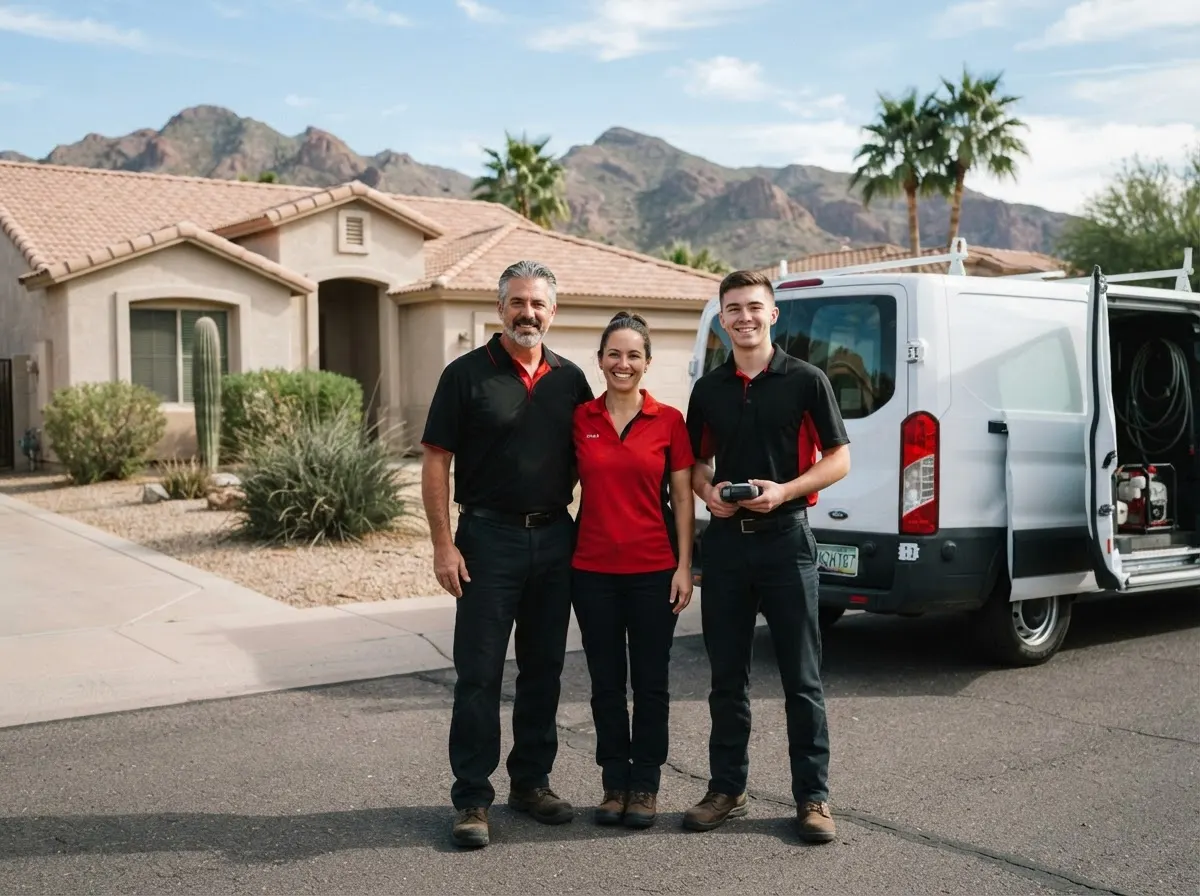
Phoenix properties face unique desert pest pressures governed by urban microclimates, irrigation corridors, and proximity to mountain reserves. In foothill zones adjacent to Camelback Mountain and South Mountain Park and Preserve, natural desert washes channel bark scorpions directly into dry-stack landscape walls and residential weep screeds. Historic flood-irrigated properties in Arcadia and Willo Historic District retain deep soil moisture that fuels heavy subterranean termite foraging and Turkestan cockroach swarms. Summer monsoon storms between July and September deposit rapid rainwater volumes that elevate humidity levels, triggering massive subterranean termite nuptial flights and driving desert roof rats from saturated wash basins directly into residential attics. Subsurface soil structures in Maryvale and North Mountain Village often feature dense caliche hardpan layers that alter termite subterranean foraging paths, forcing colonies directly upward along home plumbing penetrations and stem wall expansion joints. Older mid-century construction in Encanto Village and the Biltmore Area frequently utilizes hollow concrete masonry block perimeters without bottom mortar caps, creating subterranean highways where desert spiders, scorpions, and crickets harbor away from daytime surface heat. In modern master-planned communities across Desert Ridge, continuous landscaping drip lines and artificial turf borders create unnatural micro-reservoirs of moisture that attract breeding crickets and roaches, which serve as the primary food supply for expanding bark scorpion populations. Navigating these regional environmental vectors requires structural barrier installation tailored to specific architectural designs, localized soil compositions, and seasonal climate swings throughout Maricopa County.
Free estimates for Phoenix & the surrounding area.
 Blacksmith Pest Control